 Image 1 of 5
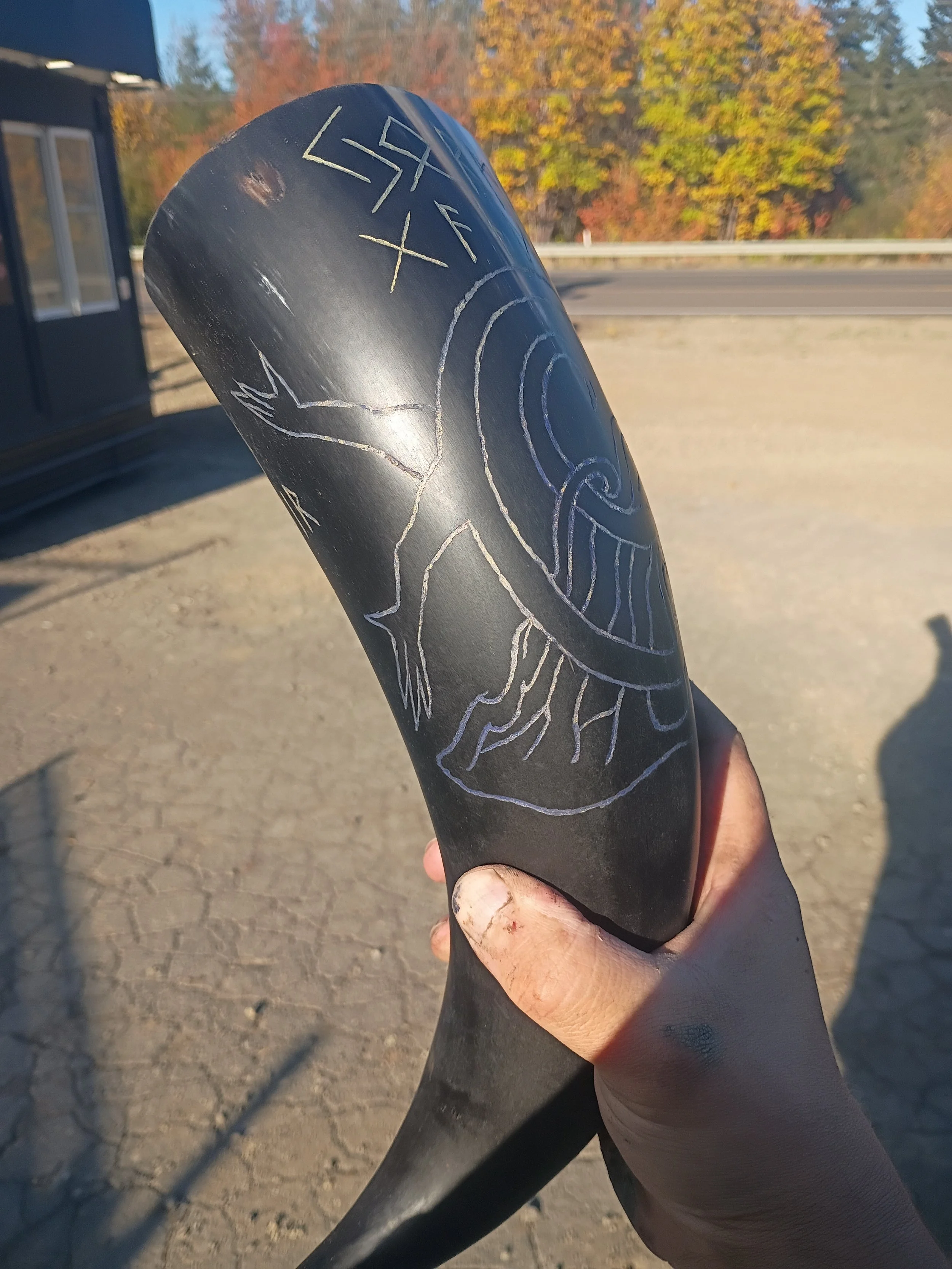 Image 2 of 5
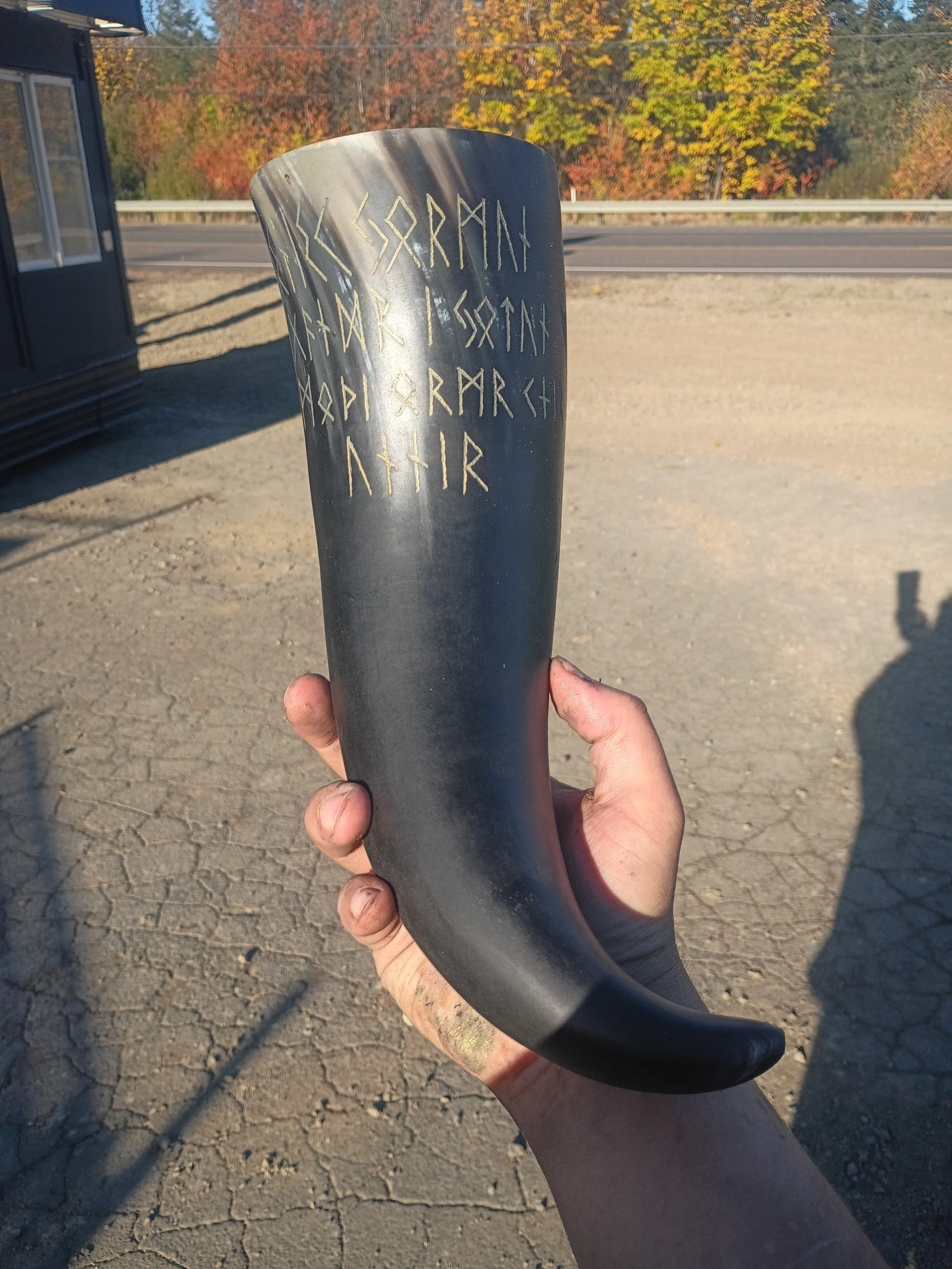 Image 3 of 5
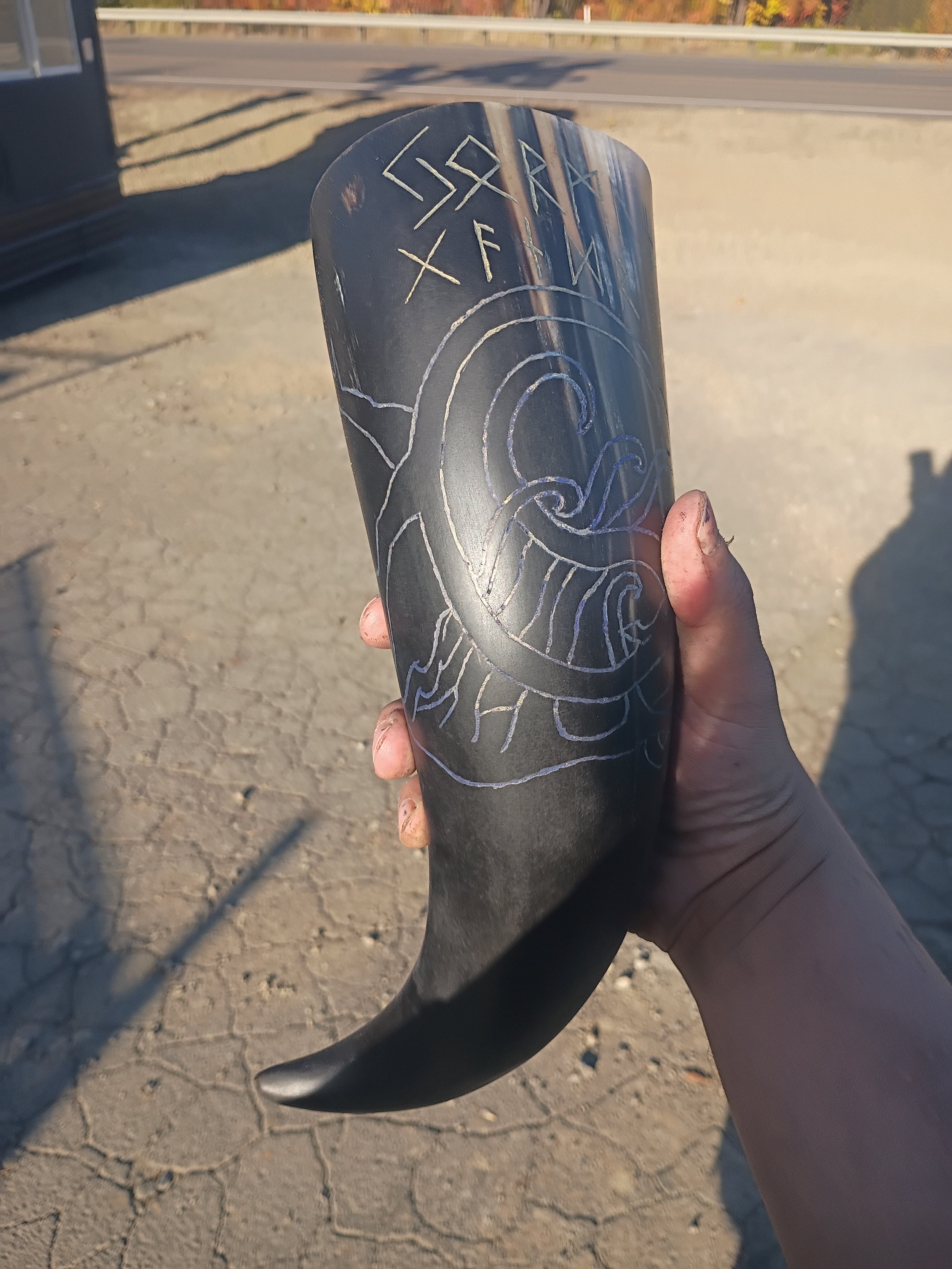 Image 4 of 5
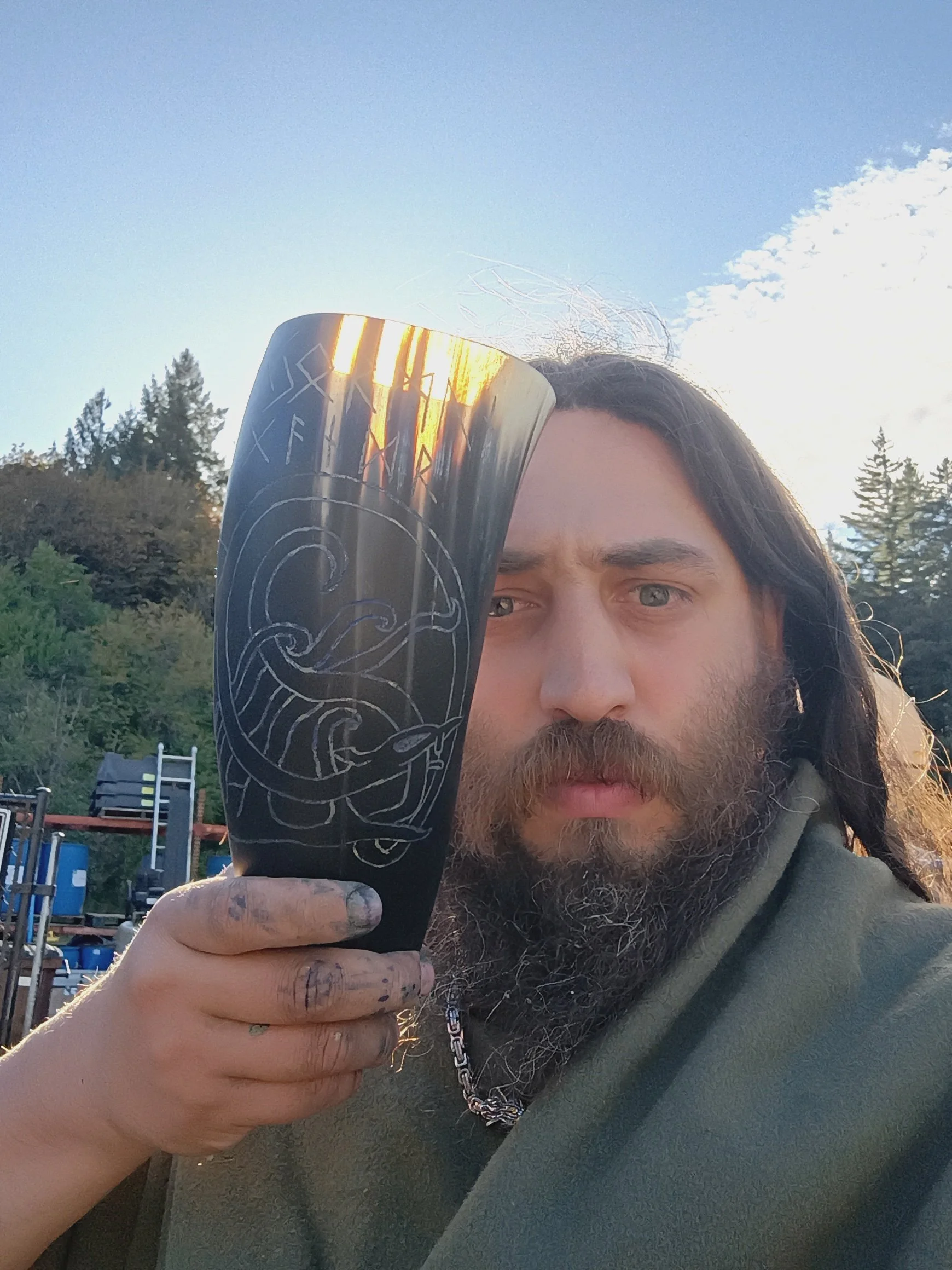 Image 5 of 5
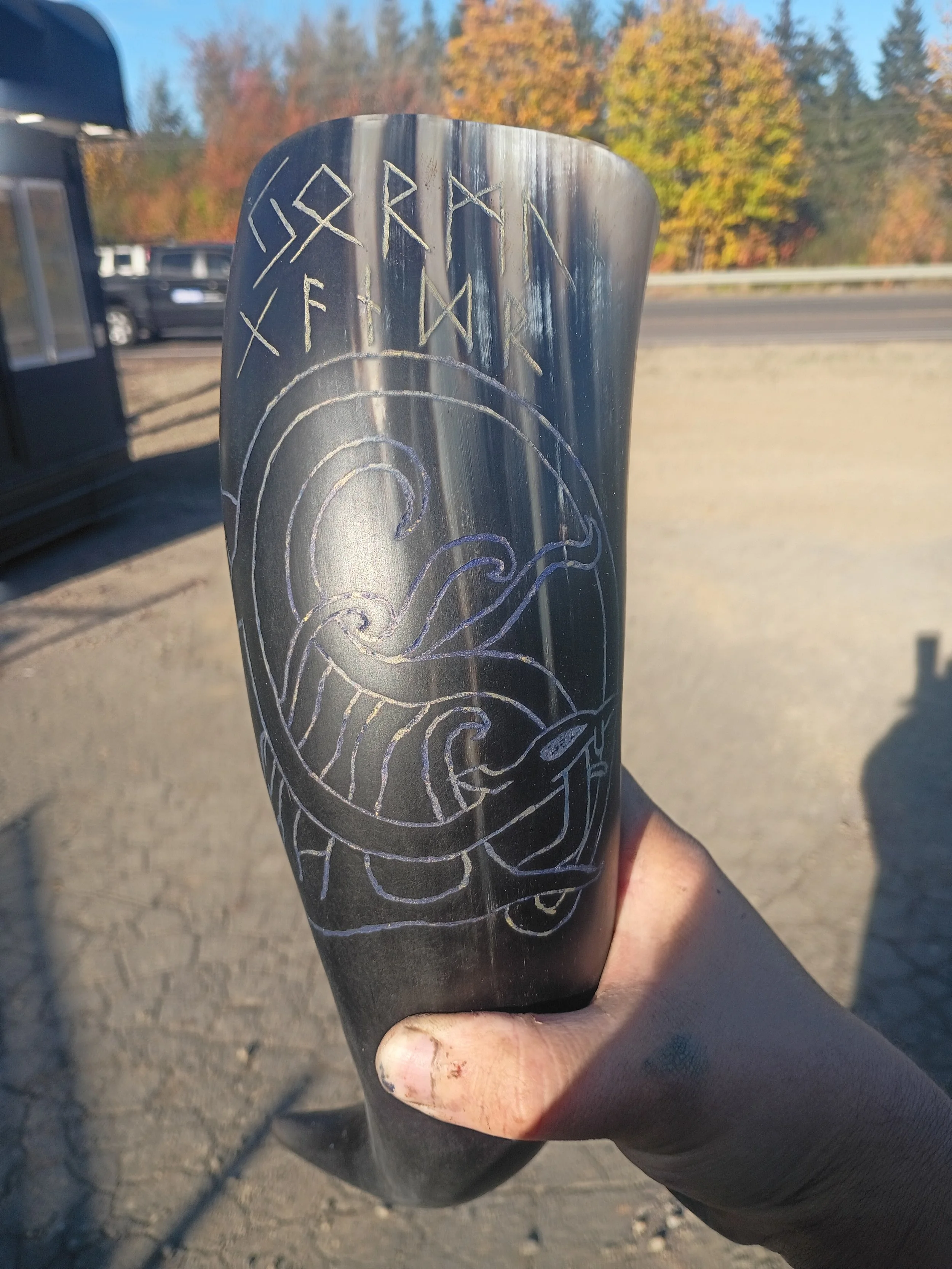
This 36 ounce drinking horn is dedicated to Jörmungandr. I named her “Unnrglíma,” a compound of “Unnr” meaning “Wave” and “glíma” meaning “wrestling.”
I had a potent spiritual experience while doing the artwork on this drinking horn. Jörmungandr is portrayed historically in artwork as being in conflict with Thor, and being dominated or slain. I had the instinct to portray Jörmungandr in a different light, so I replicated the Urnes Style used in late 11th - early 12th Century Sweden for depicting animals and serpents, but I chose to depict Jörmungandr as in a state of power wrestling with and dominating the ocean waves.
Then out of curiosity I looked up Edda stanzas about Jörmungandr and found two Völuspá stanzas I actually didn't know about:
“Hrymr ekkr austan, hefisk lind fyrir, snýsk Jörmungandr í jötunmóði; ormr knýr unnir, en ari hlakkar, slítr nái níðfölr, Naglar losnar.”
“Hrymr drives from the East, lifts his shield in front of him, Jörmungandr writhes in jötun-fury; the serpent churns the waves, and the eagle screams, pitch-dark pale in malice, rends corpses, Naglfar casts off.”
~ Völuspá stanzas 73-74 ~
Those stanzas put Jörmungandr in a place of dominance and power, entering an altered state of consciousness (the jötun-fury) and wielding control over the ocean waves, exactly like how my ancestors clearly inspired me to depict Jörmungandr in my artwork.
So the runes at the top above Jörmungandr say “Jörmungandr.” The runic inscription on the back says “Snýsk Jörmungandr í jötunmóði; ormr knýr unnir,” “Jörmungandr writhes in jötun-fury; the serpent churns the waves.”